The Port of Esbjerg had space and an interest in growth beyond its established activities. My thesis asked which expansion opportunity could fit the port location, infrastructure and strategic direction. The aim was to turn a broad question into a defensible recommendation, rather than claim that a new facility had already been built.
The challenge
I began by examining several directions, including cold chain logistics, green energy storage, a free trade zone, smart port services and cruise activity. Conversations with port representatives helped narrow the scope to a potential cold chain hub. The next question was where demand was strong enough to justify deeper analysis.
How I worked
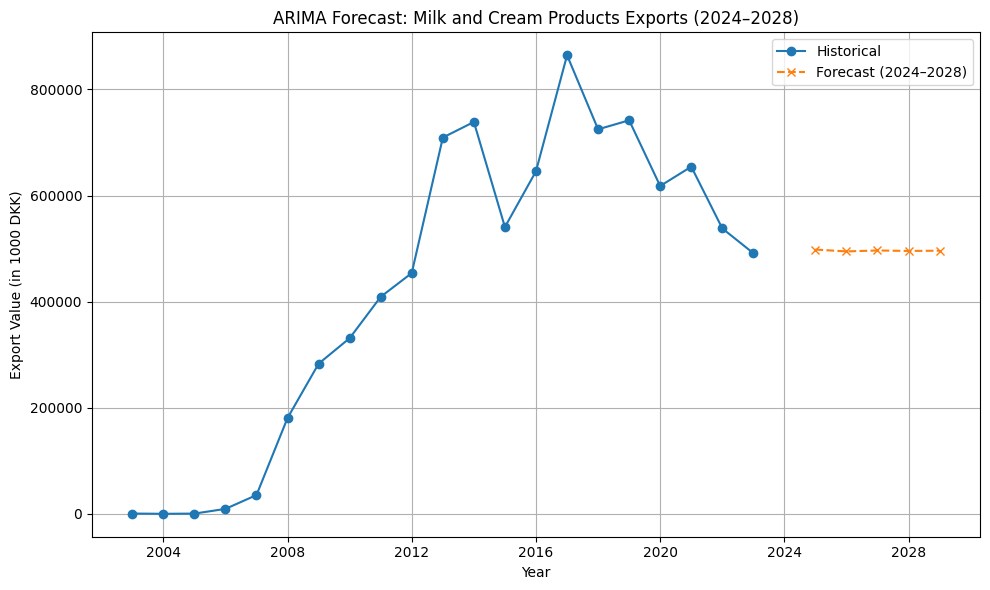
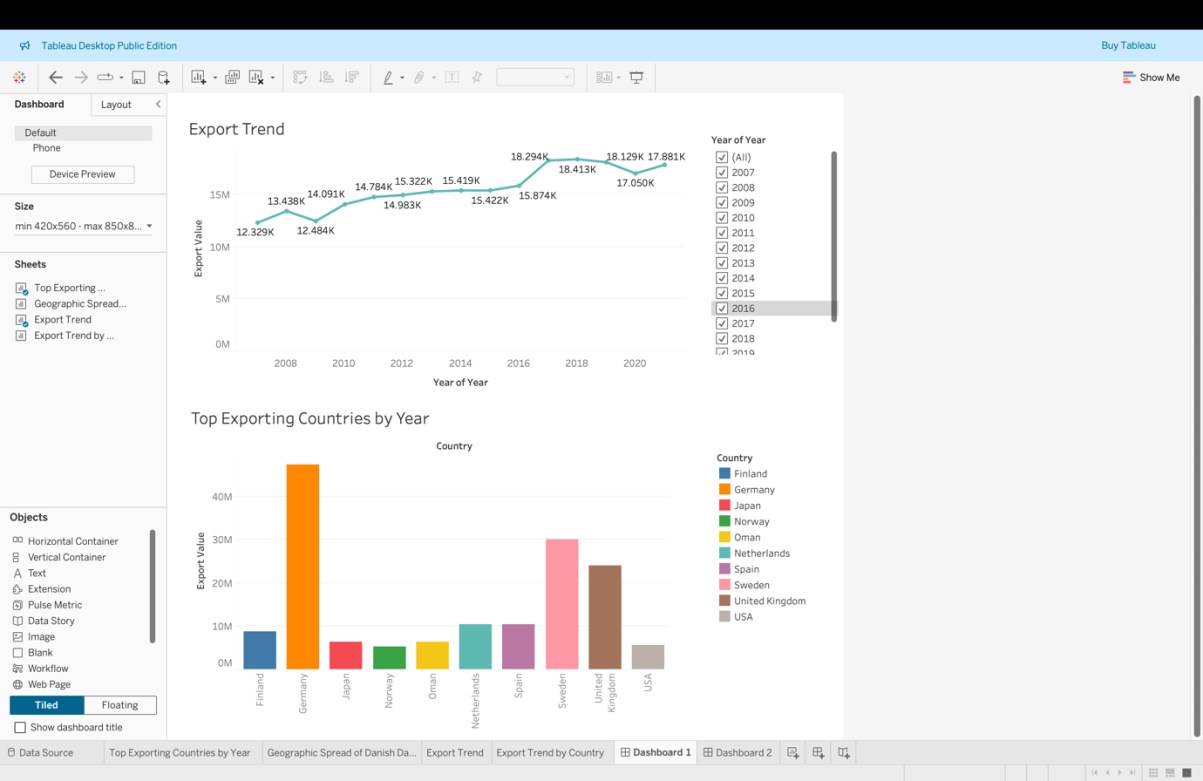
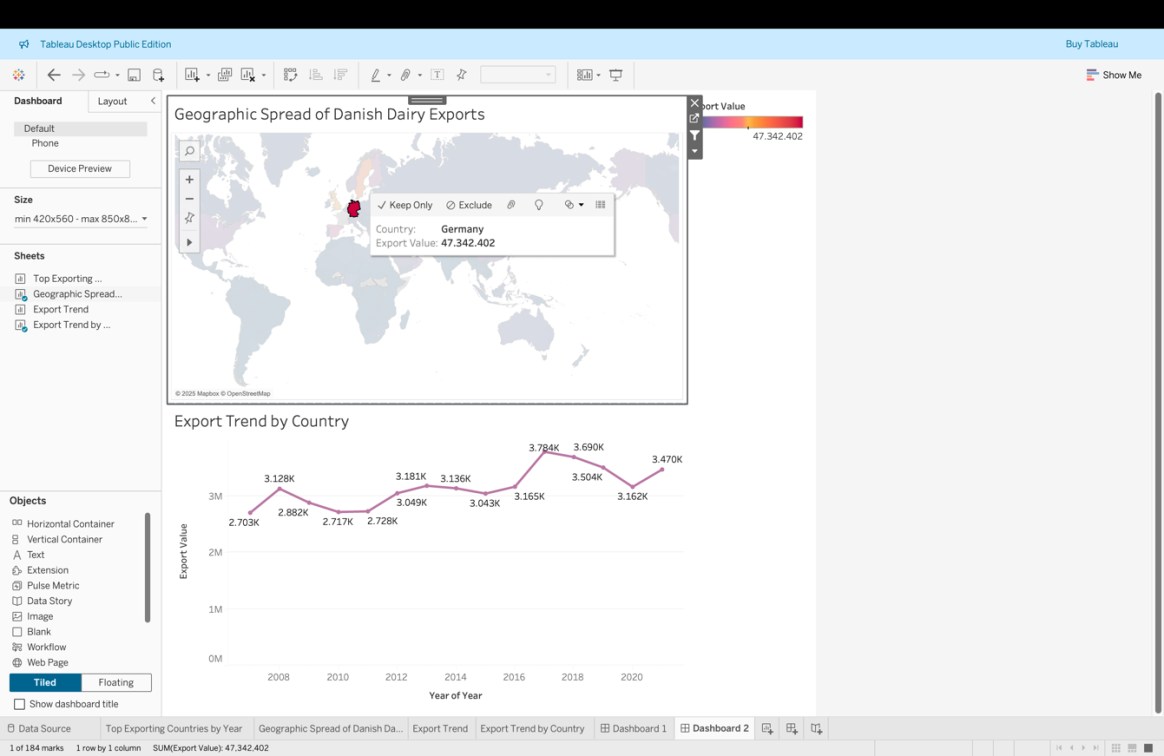
I cleaned and analysed historical Danish food export data from 2003 to 2023, compared categories using descriptive statistics, and focused on dairy after it emerged as a substantial and relatively consistent export category. I used a time series model to develop a planning baseline, then examined destination markets and the location of dairy producers to connect demand with the port's practical advantages.
Visual 1: A baseline for planning
Visual 2: Exploring markets
Visual 3: Checking geography
The recommendation
I recommended starting with a modular cold storage pilot focused on dairy. The proposal was to learn from occupancy, turnover, energy use and shipping performance before committing to a larger facility. I also considered proximity to producers, target markets, renewable energy use and the financial, regulatory and stakeholder risks of expansion.
What this project demonstrates
The strongest part of this work was moving between a stakeholder question, messy data, a forecast and a practical phased recommendation. The forecast alone could not establish commercial feasibility. It informed a proposal that would still require detailed financial, operational and market validation before investment.